Q2 Quick Notes
Q2 Quick Notes
Q2 Quick Note #17: Early Diagnosis and SCB Use Improve Seizure Control in KCNQ2-Related Disorders
Published on June 22, 2026
Excerpt
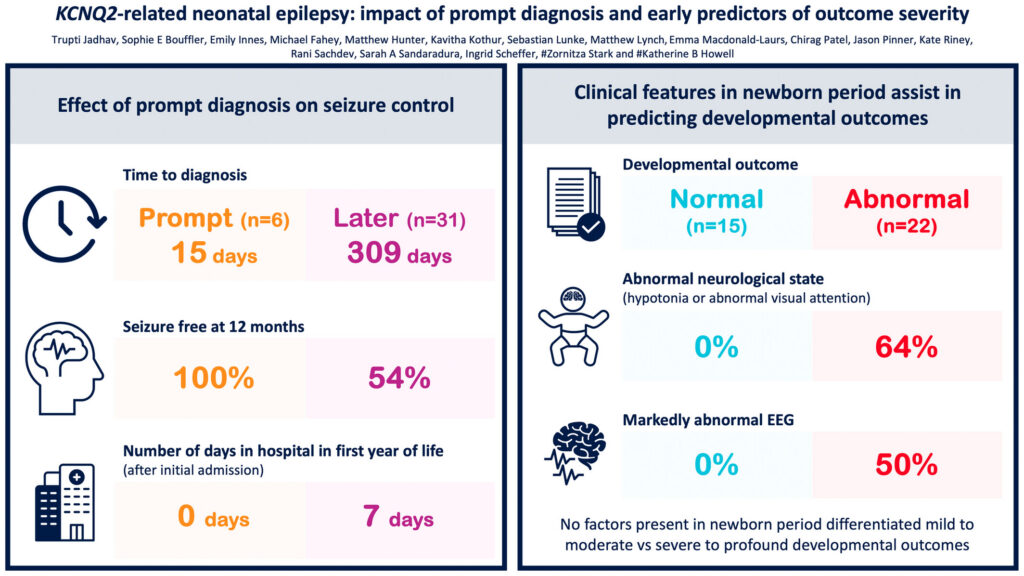
People with KCNQ2-related disorders who received a prompt diagnosis (~15 days old) were able to start targeted treatment sooner, which was associated with improved seizure control and fewer hospital visits.
What It’s About
This study focused on 37 people with KCNQ2-related disorders resulting from loss-of-function variants. Researchers wanted to answer two questions:
-
Does earlier diagnosis lead to better outcomes?
Are there any clinical features in the newborn period that can predict how a child will develop?
Regarding the first question, those who received an early genetic diagnosis were started on sodium channel blockers (SCBs) within the first month. This early intervention was associated with better seizure control and fewer hospital stays in their first year of life. The study did not find a clear difference in developmental outcomes between those who received an early diagnosis compared to those who received a late diagnosis. The researchers cautioned that this finding is likely because they did not track developmental outcomes with enough detail, not because early diagnosis didn’t help.
The study also found that newborns with abnormal neurological exams and EEGs were more likely to have developmental challenges later on, suggesting that early monitoring of these types of tests may help doctors identify children who need additional support.
Why It Matters
This study highlights the importance of getting a diagnosis as early as possible. Knowing the specific genetic cause of a child’s symptoms allows doctors to begin targeted treatment quickly. Early neurological exams and EEG results may help predict how a child will develop, giving doctors and families important information in those first weeks. While more research is needed to fully understand the impact of early intervention on development, it is likely that the sooner a genetic diagnosis is made, the greater the chance of achieving the best possible outcome.
Quick Term
Sodium Channel Blocker (SCB): Brain cells communicate using electrical signals controlled in part by sodium and potassium channels. With KCNQ2 loss-of-function variants, one particular potassium channel (Kv7.2) no longer functions as effectively, and as a result, too many positively charged potassium ions remain inside the cell. This increased positive electrical presence can lead to seizures. Sodium channel blockers work to reduce this hyperactivity by preventing positively charged sodium ions from entering the cell, which can lower the likelihood of seizures.
Link
Read Article
Summary prepared by science interns supervised by Michelle Kielhold, PhD., Science Program Manager at KCNQ2 Cure Alliance. Content is intended for informational purposes and does not replace medical advice.