KCNQ2 Connections
Reflections from the American Epilepsy Society Meeting 2025
Published on December 18, 2025
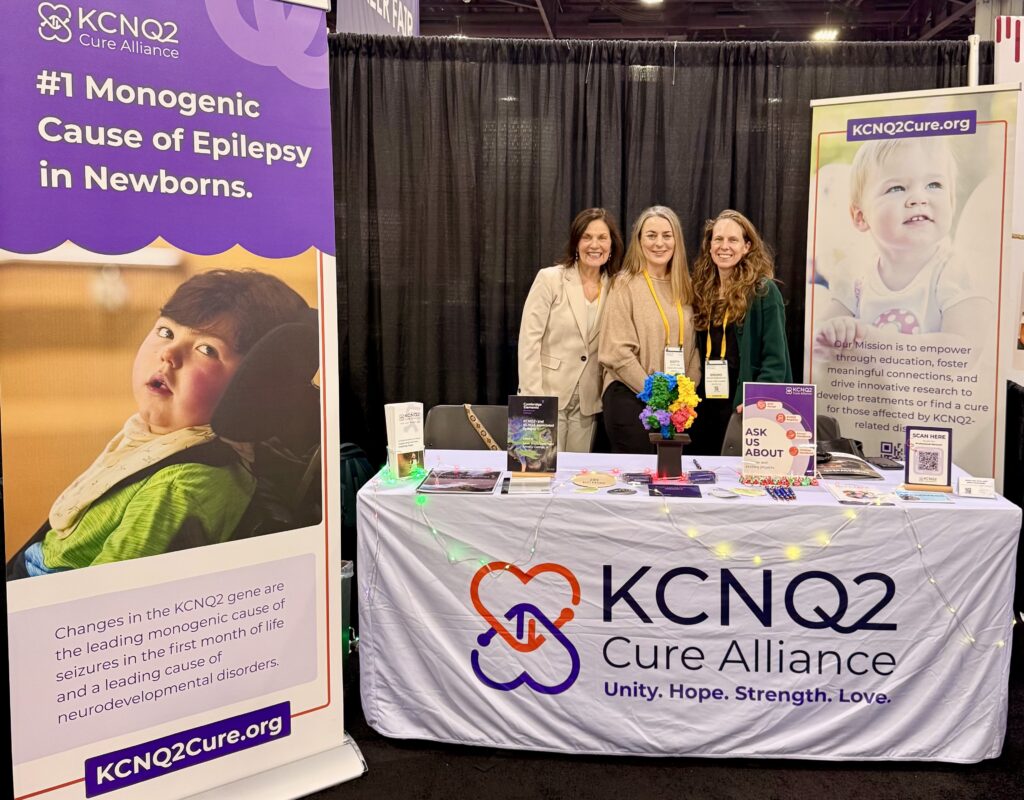
Earlier this month, KCNQ2 Cure Alliance members attended the American Epilepsy Society (AES) meeting in Atlanta, Georgia. Our goal was to connect with scientists, clinicians, and industry partners to learn about the latest advances in epilepsy research and therapies relevant to our community.
Advances in Channelopathy Research
We first joined a group of researchers who study diseases caused by changes in ion channels (called channelopathies), such as KCNQ2-DEE. This included Dr. Hee Jung Chung whose lab studies Kv7.2, the potassium channel made by the KCNQ2 gene. She explained that these channels are localized to specific areas of brain cells, but some KCNQ2 variants can cause them to be misrouted. So, while some variants change how the channels work, others affect where they go. Understanding these differences is important because it helps explain why people with KCNQ2-related conditions may respond differently to treatments.
Multiple research groups also shared that they are exploring gene-editing technologies, such as CRISPR, to treat channelopathies. We heard from two labs that rescued behavior and function in research models of SCN2A- and SCN8A-related DEEs by altering gene expression. While these efforts are still in the early stages, it is promising to see positive results using these novel techniques to treat genetic epilepsies.
Advances in Therapeutic Development
At the meeting, we also had the chance to connect directly with pharmaceutical representatives and hear firsthand about progress being made in clinical trials. Praxis shared positive results with their sodium channel blocker in SCN2A- and SCN8A-related DEEs and encouraged community members to explore their ongoing EMERALD trial, as people with KCNQ2-DEE may be eligible. Xenon also reported promising findings with their potassium channel opener for generalized epilepsy, with hopes that the therapy could be available by 2027. Biohaven highlighted an individual with KCNQ2-DEE who responded well to their potassium channel activator and suggested compassionate use may be an option for families to discuss with their physician. Finally, we met with Jazz Pharmaceuticals, which recently has a potassium channel drug in development, and we expressed our community’s interest and readiness for participating in future clinical trials.
An Atmosphere of Optimism
Overall, AES was an energizing and highly optimistic meeting. From our booth on the exhibit floor, we welcomed the opportunity to educate physicians and researchers about the KCNQ2 community and our priorities. The physicians we spoke with shared that this is the most hopeful time for new therapies they have seen in their careers, a sentiment echoed by the patient advocacy groups we met with, who also sense growing momentum.