Reflections from the 2025 KCNQ2 Cure Summit in Philadelphia
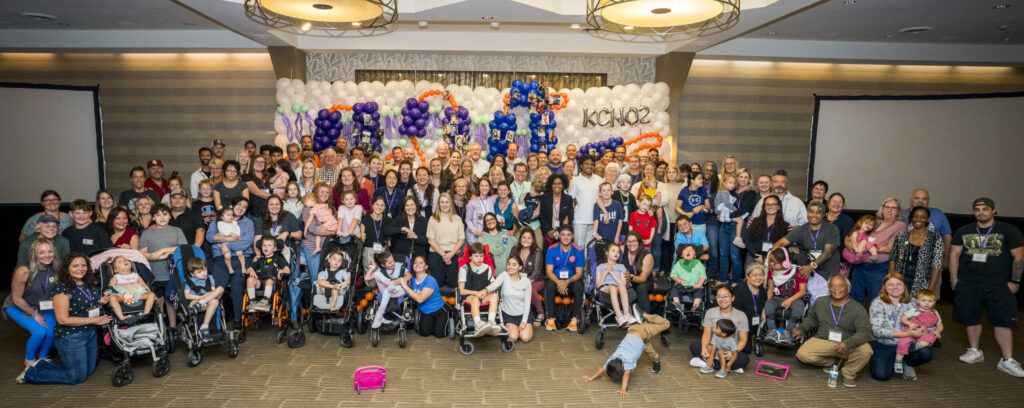
From September 26th to 28th, 162 members of the KCNQ2 community came together in Philadelphia for our 8th Family and Professional Summit. Attendees traveled from 22 states and six countries, joined by more than 30 researchers, clinicians, and industry partners. We were thrilled to welcome over 20 first-time families, nearly 20 KCNQ2 Cuties, and a lively group of siblings who added their own energy and perspective. It was the perfect mix of new faces and old friends, a true reunion with a shared purpose.
From touching stories, heartbreaking reminders that we still lose too many in our community, and deep science from the Research Roundtable, we shared the emotional and cerebral moments that define so much of our experience as family members, caregivers, and supporters of our mission to improve the lives of people living with KCNQ2-related disorders.
If you were unable to join us, this recap is for you! It will not capture every slide, conversation, or moment, but it will hopefully help bring to life the connection and momentum we all felt in Philly.
Inaugural Research Roundtable
The summit opened with our first annual Research Roundtable, held the day before the main program. Clinicians from leading hospitals, scientists from international academic research centers, and professionals from innovative biotech companies came together to share updates on research progress, identify gaps, and make connections.
To delve deeper into these discussions, check out our Research Roundtable summary blog post, which highlights the exciting range of research and therapeutic development underway for KCNQ2.
Measuring What Matters
A recurring theme of the summit was the need to measure what matters in daily life. For many families, seizures are the first alarm, but over time, the focus often shifts to other critical issues: communication, behavior, development, mobility, gastrointestinal health, and sleep, among others. Speakers emphasized the importance of developing clinical endpoints that capture meaningful change in these areas over time, not just during clinical visits. Getting this right is essential for designing future clinical trials that reflect real-world needs.
One effort supporting this goal is the KCNQ2 Variant Portal being developed by Dennis Lal and his team at UT Health Houston.. Through questionnaires, interviews, and biometric data collection, they worked with families before and during the summit. When launched later this year, the portal will become a valuable resource for both families and researchers, helping to define the relationship between genotype and phenotype and supporting new clinical research. If you haven’t already participated, it’s not too late! Learn more about how to get involved here.
Families at the Center
As always, families were the heartbeat of the Summit. We were moved by talks from Kara Boulter, Sara James, Neysha Miranda, Colin Sanford, and Scotty Sims, each of whom shared personal reflections on their journeys as caregivers. Their stories reminded us of why we gather: to support one another, to learn, and to keep pushing for progress.
A panel of parents with older children shared their hard-earned wisdom, offering insights into what they wish they had known at diagnosis and providing practical guidance to families earlier in their journey. They reminded us that a variant number does not define our kids. They are dynamic and loving people with their own stories and strengths.
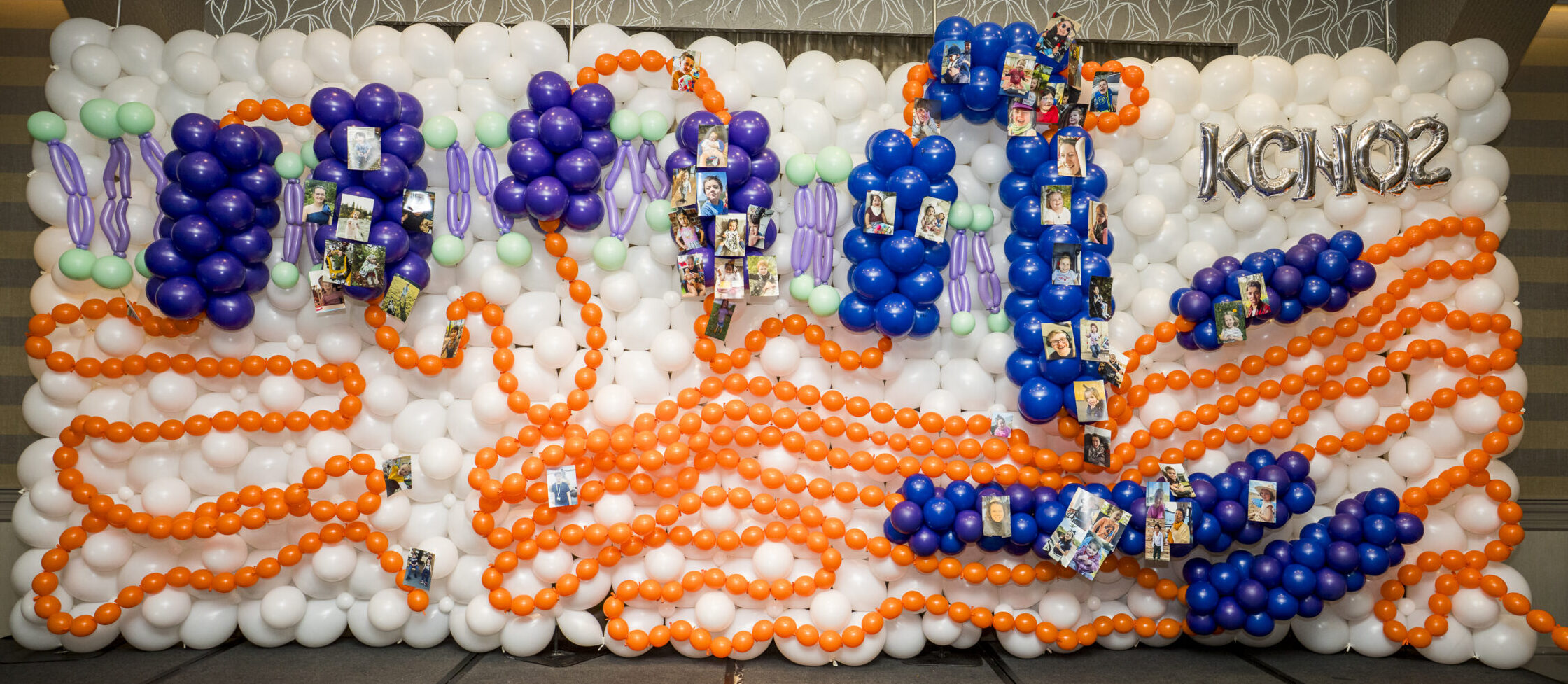
That message took physical form in one of the most memorable visuals of the weekend. Brian and Christina Getz constructed a stunning balloon backdrop of the KCNQ2 Kv7.2 channel using more than 1,600 balloons and 20 hours of work. Families were invited to place their child’s photo at the location of their variant, transforming a scientific model into a living portrait of our community.
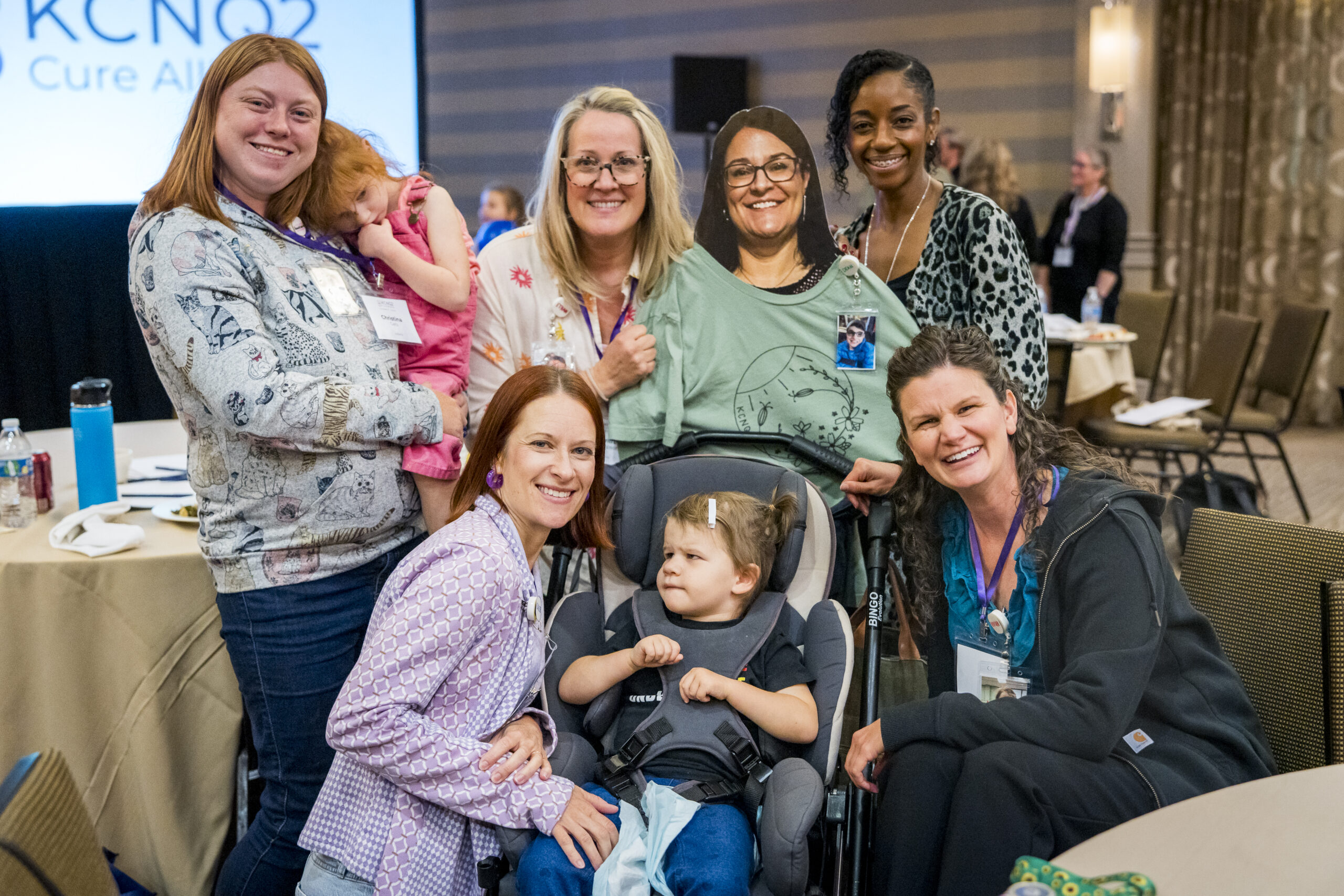
Another small but powerful moment spoke volumes about who we are. A group of moms brought a life-sized photo cutout of Charlene O’Reilly, who was unable to attend the summit in person. The cutout sat among us during sessions and meals, ensuring her presence was felt. It was a simple gesture, but it carried a powerful message: no one is left behind in this community. We find ways to stay connected, even when we're far apart.
And of course, there was plenty of joy. We explored Philadelphia on a walk-and-roll tour, soaking up the warm weather and the city’s history between sessions. We boogied together at the Warrior Dance Party, shared meals that sparked new friendships and late-night conversations, and created space for both excitement and calm. Jennifer Thompson designed a sensory room that offered a peaceful retreat when needed, while our SuperSib Camp provided siblings with a space to connect and shine. And to top it all off, beloved children’s musician Laurie Berkner sang a song just for us, a moment that filled the room with smiles.
Volunteers Make It Work
None of this would happen without volunteers. This year, family volunteers were everywhere, doing the behind-the-scenes work that made this gathering feel seamless. Kaitlyn, Geof Coeling, and Kaitlyn’s parents, Sue and Virgil, greeted everyone warmly and ran the smoothest check-in process we’ve ever seen. Kate and Scott Crandall, along with Jennifer Thompson, stepped up again and again, contributing to the smooth flow of the entire weekend. Many others contributed to the room setup, provided family support, handled session logistics, and assisted with the numerous small tasks that make big events successful.
If you volunteered, thank you. You made the summit feel like a community, not just a conference.
Looking Ahead
The summit closed with a strategic planning session that generated a rich mix of ideas for the future. Some focused on building local chapters and regional fundraisers to sustain connections between summits. Others proposed parent wellness programs, new ways to share research resources, and national advocacy initiatives, including participating in Rare Disease Week in Washington, D.C. Additionally, there were discussions on better defining endpoints and ensuring that the full spectrum of KCNQ2-related conditions is represented, from self-limited epilepsy to complex developmental challenges.
The thoughtfulness of these ideas showed a community ready to shape its own future. We will bring these inputs together into a three-year strategic plan to be shared in the coming months.
A Call to Action
The energy in Philadelphia was inspiring, but it also highlighted the significant work that remains. More labs are studying KCNQ2. More companies are exploring innovative treatment approaches. But opportunity alone isn’t enough. Progress depends on all of us: participating in research, fundraising to fuel studies and family programs, volunteering to strengthen initiatives, and making simple, meaningful connections within our community. Every contribution, big or small, helps turn ideas into action for our children. As we step into our next decade, we carry this momentum with us. There’s a place for everyone in this effort, and together, we will shape the future of KCNQ2.
Our Summit video will be posted soon on our YouTube Channel.